
Every firm has “the meeting.” You know the one: the year-end sit-down where you walk a client through where their numbers landed, flag a couple of things for next year, and wrap up in time to get back to the actual work. It’s on your calendar every December or January, client after client, like clockwork.
For most companies, this is precisely the issue: everything runs like clockwork. You arrive, summarize the previous twelve months, and then leave. Meanwhile, the client sits across from the one person who has been analyzing their numbers all year—the individual best equipped to provide valuable insights into the future direction of their business. Instead of focusing on what lies ahead, you spend the entire hour discussing what has already happened.
That’s not a compliance failure. It’s a menu failure. You’ve been serving the same appetizer course all year and never once mentioned there’s a dessert menu.
The Best Advisory Pitch You’ll Never Have to Write
But what makes the year-end meeting different from any other moment in your client relationship is that the client already trusts you, is already thinking about next year, and is already sitting down specifically to talk about their business with you. You don’t have to manufacture an opening because the meeting is the opening.
The data backs this up. Business owners who get regular, forward-looking advice from their accountant are considerably more likely to say it improves how competitively they run their business, and a meaningful share are willing to pay their accountant more for exactly that kind of input. The demand isn’t the problem. The problem is that most firms never explicitly put the offer on the table. Maybe they just quietly hope the client will ask.
Clients don’t ask because they don’t know what to ask for. That’s on you.
Look Back, Look Forward, Offer: A Three-Part Script
You don’t need a sales pitch (good thing because most accountants are very uncomfortable making sales pitches!). You need a structure simple enough that any staff member running the year-end meeting can follow it without sounding like they’re reading from a script — even though, secretly, they are.
- Look back (10 minutes). Walk through the year at a high level: revenue trend, a couple of notable swings, anything that surprised them. Keep it visual and keep it short. This part is compliance, and compliance doesn’t need fifty minutes of the hour.
- Look forward (10 minutes). Ask two questions and actually wait for the answers: “What’s changing in your business next year?” and “What’s the thing that keeps you up at night about it?” This is where the meeting turns from a recap into a conversation, and it’s where you’ll hear the opening for whatever you’re about to offer.
- Offer (5 minutes). Name one specific thing, tied to what they just told you. Not “we offer advisory services” (that’s a brochure line, not an offer). Try: “You mentioned you’re thinking about hiring your first employee next year — we could set up a monthly check-in specifically to model out what that does to your cash flow before you commit to it.” Specific, timely, and free of jargon.
If they say no? That’s okay, you’ve still planted the seed, and you now have a note for next year’s meeting. The point of the script isn’t a 100% close rate. It’s making sure the offer gets made at all, every year, for every client, instead of depending on whether the person running the meeting happened to feel like selling that day (news flash: they won’t).
The Checklist That Makes It Repeatable
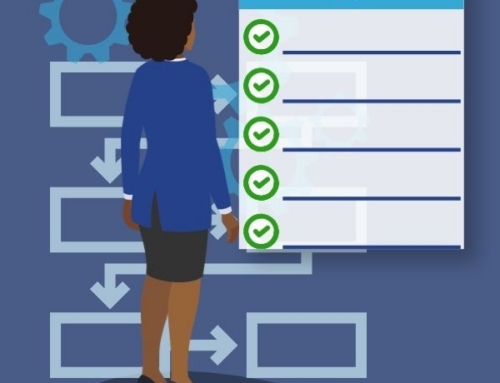
A script only works if it happens the same way every time, for every client, whether you’re running the meeting or your newest hire is. That means it needs to live somewhere other than your memory.
Build a simple three-part checklist for the meeting cycle:
- Pre-meeting prep. Pull the year’s financials, note any pattern worth flagging, and — if you haven’t already worked through our year-end checklists for bookkeepers — get those closed out first so the numbers in the meeting are actually final. There’s nothing worse than pitching a forward-looking advisory relationship on top of numbers you’ll have to walk back next week.
- During the meeting. A one-page prompt sheet with the Look Back / Look Forward / Offer structure, plus a spot to jot down whatever the client says is keeping them up at night. That note becomes next year’s opening line, so make sure you store it somewhere it will be available next year (like Aero).
- After the meeting, add a follow-up task due within 48 hours to send a one-paragraph recap and the specific offer in writing. This is the step almost every firm skips, and it’s the step that actually closes the engagement. An offer made verbally in a meeting and never followed up in writing is, for practical purposes, an offer that was never made.
That last step depends on somebody actually doing it on schedule, every single time, which is exactly the kind of thing that falls through the cracks when it lives on a sticky note instead of a scheduled task. If you’ve been tracking down outstanding client items all year, you already know the fix: put the follow-up on a checklist that assigns itself, tracks itself, and shows up on somebody’s dashboard until it’s marked done.
Do This Before Busy Season Eats Your Calendar
October is the month to build this system, not January. By January, you’re deep in the exact capacity crunch we’ve talked about before, and “let’s have a longer conversation about your business” is the first thing that gets cut from a rushed meeting. Build the checklist now, load the year-end meeting template into your firm’s recurring services, and the advisory conversation happens because it’s on the calendar, not because someone remembered to make time for it in the middle of your busiest quarter.
Once the checklist exists, turning it into a firm-wide habit is just a matter of scheduling. Attach it to every client’s year-end meeting as a recurring task, assign it to whoever owns that relationship, and it renews itself every year without anyone rebuilding it from a blank page (or worse, from memory).
About the Author: Laura Redmond

Related Posts